The world's coral reefs are facing unprecedented threats from rising ocean temperatures, with mass bleaching events becoming increasingly frequent and severe. Scientists have now identified a potential genetic editing window that could enhance the thermal tolerance of coral symbionts – the microscopic algae that provide corals with both color and nourishment. This discovery opens new avenues for reef conservation in an era of climate change.
Coral bleaching occurs when stressed corals expel their symbiotic algae, leaving behind ghostly white skeletons. While corals can survive short-term bleaching, prolonged events often lead to widespread mortality. The key to resilience may lie in the genetic makeup of the symbiont algae (Symbiodiniaceae), which have varying temperature tolerances depending on their strain.
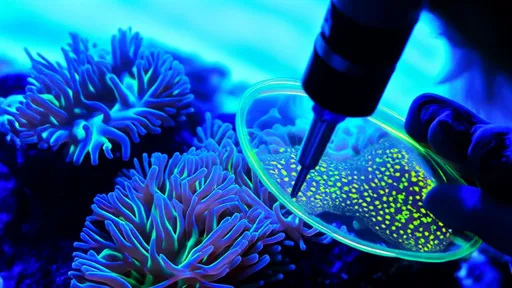
Recent research has revealed specific genetic markers associated with heat tolerance in these crucial microorganisms. By targeting these markers through precise genetic editing techniques, scientists believe they could create more resilient algal strains that could help corals withstand warmer waters. The challenge lies in identifying the optimal "editing window" – the specific genetic sequences and expression patterns that confer thermal resistance without compromising other vital functions.
The most promising targets involve genes related to photosynthesis efficiency, reactive oxygen species management, and heat shock protein production. Laboratory experiments have shown that modifying these pathways can significantly improve algal survival under thermal stress. However, researchers caution that any genetic modifications must maintain the delicate balance of the coral-algae symbiosis, which has evolved over millions of years.
Field studies on naturally heat-resistant coral populations have provided valuable insights into which genetic adaptations prove most effective in real-world conditions. Corals in warmer regions like the Red Sea and certain Pacific atolls harbor symbionts with distinct genetic profiles that enable them to thrive in temperatures that would bleach other reefs. Understanding these natural adaptations is informing the artificial enhancement approaches.
Ethical considerations weigh heavily in this emerging field of "assisted evolution." While the potential benefits for reef conservation are significant, introducing genetically modified organisms into marine ecosystems carries unknown risks. The scientific community is engaged in ongoing debates about appropriate safeguards and containment measures should these technologies progress beyond laboratory testing.
Technical hurdles remain substantial. Current gene-editing tools like CRISPR-Cas9 must be adapted for use with coral symbionts, which present unique challenges compared to more commonly studied microorganisms. Delivery methods for introducing modified algae into wild coral populations also require careful development to ensure effectiveness and minimize ecological disruption.
The timing of intervention represents another critical factor. Researchers have identified specific life stages of both corals and their symbionts that may be more receptive to hosting modified algae. Larval settlement periods and post-bleaching recovery phases appear to offer the most promising windows for introducing enhanced symbionts with minimal stress to the coral host.
Conservationists emphasize that genetic solutions should complement rather than replace traditional reef protection measures. Even with advanced biotechnology, reducing greenhouse gas emissions and mitigating local stressors like pollution and overfishing remain essential for coral survival. The genetic approach offers a potential lifeline for reefs while broader climate solutions take effect.
Pilot projects in controlled marine environments are already underway to test the viability of genetically enhanced symbionts. Early results suggest modest improvements in bleaching thresholds, though much work remains to scale these techniques for ecosystem-wide application. Researchers are proceeding cautiously, with extensive risk assessment at each stage of development.
The coming decade will prove crucial for determining whether genetic interventions can buy time for coral reefs in a warming world. As ocean temperatures continue to rise, the window for both genetic editing and climate action grows narrower. Scientific innovation, coupled with international cooperation, may offer hope for preserving these vital marine ecosystems for future generations.

By /Jul 28, 2025

By /Jul 28, 2025

By /Jul 28, 2025

By /Jul 28, 2025

By /Jul 28, 2025

By /Jul 28, 2025

By /Jul 28, 2025

By /Jul 28, 2025

By /Jul 28, 2025

By /Jul 28, 2025

By /Jul 28, 2025
By /Jul 28, 2025

By /Jul 28, 2025
By /Jul 18, 2025

By /Jul 28, 2025

By /Jul 28, 2025

By /Jul 28, 2025
By /Jul 28, 2025

By /Jul 28, 2025
By /Jul 28, 2025