Exoplanetary Atmospheric Escape: A Spectrum of Survivors under Stellar Wind Stripping

Jul 28, 2025 By

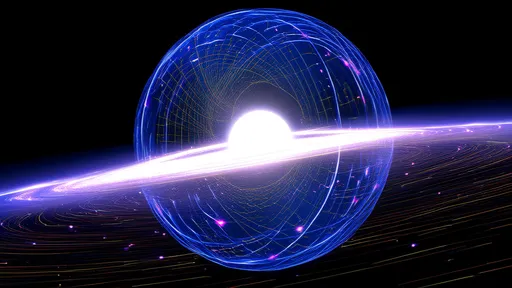
In the vast cosmic theater of exoplanetary systems, a silent drama unfolds daily—the relentless stripping of atmospheres by stellar winds. Recent studies have revealed that some planets manage to cling to their gaseous envelopes against all odds, while others are reduced to barren cores. This survival story, written in the language of magnetic fields, gravity, and radiation, is reshaping our understanding of planetary evolution.

The Invisible Battlefield

Stellar winds—streams of charged particles ejected from stars—act as cosmic sandblasters, eroding planetary atmospheres over billions of years. Young, active stars particularly unleash furious winds that can reach velocities exceeding 2 million kilometers per hour. When these winds collide with exoplanet atmospheres, they create shock waves capable of stripping away entire atmospheric layers. The phenomenon, known as hydrodynamic escape, transforms some gaseous worlds into skeletal remains of their former selves.

Yet amidst this destruction, certain planets emerge as atmospheric survivors. Their secret lies in an intricate interplay of factors: planetary mass, atmospheric composition, and crucially, the presence of protective magnetic fields. These unseen force fields deflect stellar winds much like Earth's magnetosphere shields our atmosphere from solar particles. Without such protection, even massive atmospheres stand little chance against persistent stellar bombardment.

The Goldilocks Zone of Atmospheric Retention

Observations from space telescopes have uncovered surprising patterns in atmospheric survival rates. Planets orbiting at intermediate distances from their stars—neither too close to be fried nor too far to freeze—show remarkable resilience. These worlds occupy what astronomers now call the "atmospheric preservation sweet spot," where stellar wind pressure balances with planetary gravitational pull.

Hot Jupiters, despite their proximity to host stars, often retain thick atmospheres due to their enormous gravity. Meanwhile, smaller sub-Neptunes face greater challenges—their weaker gravity makes atmospheric particles easier to strip away. The most vulnerable are Earth-sized planets in close orbits around M-dwarf stars, where intense stellar activity combines with modest planetary gravity to create perfect conditions for atmospheric evaporation.

Chemical Fingerprints of Survival

Advanced spectroscopy has allowed scientists to read the chemical tales written in escaping atmospheres. Elements like hydrogen and helium stream away most easily, leaving behind heavier molecules. This selective escape alters atmospheric chemistry over time, with some planets developing oxygen-rich envelopes as hydrogen escapes. Such chemical transformations may create false biosignatures, complicating the search for life.

Remarkably, some atmospheric components fight back against erosion. Water vapor, when present in upper atmospheres, can dissociate into hydrogen and oxygen under stellar radiation. The heavier oxygen atoms then form a protective cap that slows further atmospheric loss. This natural defense mechanism might explain how some temperate planets maintain surface liquid water despite billions of years of stellar bombardment.

Magnetic Shields: The Unsung Heroes

The presence and strength of planetary magnetic fields emerge as perhaps the most critical factor in atmospheric survival. These invisible shields not only deflect charged particles but also prevent stellar winds from directly interacting with the upper atmosphere. Recent modeling suggests that even weak magnetic fields can dramatically reduce atmospheric loss rates, buying precious time for planets to develop other protective mechanisms.

Earth's global magnetic field offers a prime example of this protection in action. Without it, our atmosphere would have eroded away long ago under the Sun's constant assault. Exoplanets with similar magnetic defenses—whether generated by iron cores or other dynamo mechanisms—stand the best chance of maintaining life-sustaining atmospheres over geological timescales.

Survivor Planets and the Search for Habitability

The growing catalog of atmospheric survivors challenges previous assumptions about habitable zone boundaries. Some planets previously written off as uninhabitable due to stellar activity now appear potentially life-bearing, provided they possess adequate atmospheric protection. This realization expands the cosmic real estate where life could potentially take hold.

Future telescopes equipped with advanced spectrographs will probe deeper into these atmospheric survival stories. By measuring atmospheric loss rates across different planet types and stellar environments, astronomers aim to construct a comprehensive survival map of the galaxy—a guide to where atmospheres, and possibly life, might endure.

As research continues, one truth becomes clear: in the cosmic battle between stellar winds and planetary atmospheres, survival depends on a delicate balance of forces. Those worlds that maintain this equilibrium become the oases of the galaxy, their atmospheres whispering tales of resilience across the light-years.

Recommend Posts
Science

Diamond Quantum Compass: Nanoscale Sensing of Earth's Magnetic Field Perturbations

By /Jul 28, 2025

The realm of quantum sensing has taken a revolutionary leap forward with the advent of diamond-based quantum compasses, capable of detecting minuscule perturbations in Earth's magnetic field at the nanoscale. This groundbreaking technology leverages the unique properties of nitrogen-vacancy (NV) centers in diamond crystals, offering unprecedented sensitivity and precision. Unlike traditional magnetic sensors, which often struggle with environmental noise and limited resolution, diamond quantum compasses promise to redefine navigation, geophysical exploration, and even biomedical imaging.
Science

Liquid Metal Neural Electrodes: Adaptive Brain Tissue Flexible Interface

By /Jul 28, 2025

In the rapidly evolving field of neural engineering, scientists are constantly seeking materials and technologies that can seamlessly integrate with the human brain. Traditional neural electrodes, often made of rigid metals or silicon, have long posed challenges due to their mechanical mismatch with soft brain tissue. This discrepancy can lead to inflammation, scarring, and signal degradation over time. However, a groundbreaking solution has emerged in the form of liquid metal neural electrodes, which promise to revolutionize brain-machine interfaces by offering unprecedented flexibility and biocompatibility.
Science

Quantum Sensors for Mapping Urban Underground Pipelines: The Cold Atom Gravimeter

By /Jul 28, 2025

Beneath the bustling streets of modern cities lies a labyrinth of pipes, cables, and tunnels—critical yet invisible infrastructure that keeps urban life functioning. For decades, mapping these subsurface networks has relied on crude methods: ground-penetrating radar with limited resolution, invasive digging, or outdated paper records. Now, a breakthrough in quantum sensing is rewriting the rules of urban exploration.
Science

Propolis Mechanical Structure: Seismic Optimization Model of Hexagonal Architecture

By /Jul 28, 2025

In the relentless pursuit of earthquake-resistant architecture, engineers and designers are turning to an unexpected muse: the humble honeycomb. This natural wonder, perfected over millions of years of evolution, is inspiring a radical shift in how we conceptualize structural stability. The hexagonal pattern, long celebrated for its strength-to-weight ratio in aerospace engineering, is now making waves in seismic design with potentially transformative implications for urban resilience.
Science

Exoplanetary Atmospheric Escape: A Spectrum of Survivors under Stellar Wind Stripping

By /Jul 28, 2025

In the vast cosmic theater of exoplanetary systems, a silent drama unfolds daily—the relentless stripping of atmospheres by stellar winds. Recent studies have revealed that some planets manage to cling to their gaseous envelopes against all odds, while others are reduced to barren cores. This survival story, written in the language of magnetic fields, gravity, and radiation, is reshaping our understanding of planetary evolution.
Science

Photonic Quantum Repeaters: Relay Stations for Thousand-Kilometer Quantum Networks

By /Jul 28, 2025

The dream of a global quantum internet has taken a significant leap forward with the development of photon quantum repeaters. These devices act as crucial relay stations, enabling quantum communication over distances that were previously unimaginable. Unlike classical repeaters, which simply amplify signals, quantum repeaters preserve the delicate quantum states of photons, making them indispensable for long-distance quantum networks.
Science

Solar Sail Interstellar Navigation: Deep Space Orientation Utilizing Solar Wind Streams

By /Jul 28, 2025

The concept of solar sailing has long captivated the imaginations of scientists and space enthusiasts alike. Unlike traditional propulsion systems that rely on chemical fuels, solar sails harness the momentum of photons emitted by the sun. But what if we could take this idea even further? Recent advancements in interstellar navigation propose leveraging the charged particles of the heliosphere—solar wind—to achieve precise deep-space orientation. This emerging field, known as heliospheric particle stream navigation, could revolutionize how we traverse the cosmos.
Science

Asteroid Gravitational Lensing: Exploiting Micro-Gravity to Detect Dark Matter

By /Jul 28, 2025

The cosmos has always been a playground for the curious, a vast expanse where the known and the unknown dance in an intricate ballet. Among the most enigmatic players in this dance is dark matter, an invisible substance that makes up about 85% of the universe's mass yet eludes direct detection. Traditional methods of hunting dark matter—through particle colliders or underground detectors—have yielded tantalizing hints but no definitive answers. Now, astronomers and physicists are turning to an unconventional tool: asteroids and their subtle gravitational effects.
Science

Self-Healing Solar Panels: Automatic Replenishment of Photosensitizer in Microfluidic Channels

By /Jul 28, 2025

The renewable energy sector is witnessing a groundbreaking innovation with the development of self-healing solar panels. Researchers have successfully integrated microfluidic channels into photovoltaic (PV) cells, enabling the automatic replenishment of photosensitive agents. This advancement promises to significantly extend the lifespan of solar panels while reducing maintenance costs and improving efficiency.
Science

Atmospheric Ice Nuclei Program: Revolutionizing the Efficiency of Artificial Snow Cloud Catalysis

By /Jul 28, 2025

The global scientific community is abuzz with groundbreaking developments emerging from atmospheric ice nucleation research programs. What began as niche meteorological experiments have blossomed into a technological revolution with profound implications for water resource management, climate science, and weather modification capabilities.
Science

Phosphorene Transistors: 2D Semiconductor Switches Beyond Silicon-Based

By /Jul 28, 2025

The semiconductor industry stands at the precipice of a transformative era as researchers explore alternatives to silicon-based transistors. Among the most promising candidates is phosphorene, a two-dimensional (2D) material derived from black phosphorus. With its unique electronic properties and potential for high-performance switching, phosphorene transistors are emerging as a viable successor to traditional silicon devices, offering solutions to the limitations of Moore's Law.
Science

Coral Bleaching Alert: Editing Window for Symbiotic Algae Temperature Tolerance Genes

By /Jul 28, 2025

The world's coral reefs are facing unprecedented threats from rising ocean temperatures, with mass bleaching events becoming increasingly frequent and severe. Scientists have now identified a potential genetic editing window that could enhance the thermal tolerance of coral symbionts – the microscopic algae that provide corals with both color and nourishment. This discovery opens new avenues for reef conservation in an era of climate change.
Science

Topological Quantum Processor: Error-Immune Computation in Nine-Dimensional Space Encoding

By /Jul 28, 2025

The race to build practical quantum computers has taken a fascinating turn with the emergence of topological quantum processors. Unlike conventional quantum systems that rely on fragile qubits prone to decoherence, these processors leverage exotic nine-dimensional encoding schemes rooted in advanced mathematical constructs. This approach promises to revolutionize error correction in quantum computing by making it intrinsic rather than bolted-on.
Science

Deep-Sea Dark Ecology: Electron Exchange Chains of Hydrothermal Vent Microorganisms

By /Jul 18, 2025

In the crushing darkness two miles beneath the ocean's surface, where sunlight cannot penetrate and pressures exceed 250 atmospheres, life persists in ways that defy conventional biological wisdom. The discovery of thriving microbial communities around hydrothermal vents has revolutionized our understanding of life's adaptability, particularly through their remarkable ability to perform direct electron transfer. These extremophiles don't just survive in this alien environment - they've developed sophisticated electrical networks that may hold secrets about life's origins and future biotechnological applications.
Science

Solar-Driven Zero-Salinity Osmotic Membrane for Seawater Desalination

By /Jul 28, 2025

In a groundbreaking development for sustainable water purification, researchers have unveiled a novel aerogel-based desalination membrane capable of producing freshwater from seawater using solar energy alone. This zero-salt-flux technology harnesses the unique properties of nanostructured aerogels to achieve what was previously considered impractical – passive desalination without moving parts, electrical inputs, or salt accumulation.
Science

Galactic Dark Matter Halo: 3D Modeling of Anomalous Rotation Curves

By /Jul 28, 2025

Astronomers have long been puzzled by the mysterious gravitational effects observed in our Milky Way galaxy that cannot be explained by visible matter alone. The enigma of galactic rotation curves—where stars at the outer edges of spiral galaxies move at unexpectedly high velocities—has led scientists to propose the existence of dark matter. Now, a groundbreaking three-dimensional modeling study focusing on the Milky Way's dark matter halo has shed new light on these rotational anomalies, offering fresh insights into the invisible scaffolding that shapes our galaxy.
Science

Quantum Entanglement of Phonons: Superconducting Manipulation of Silicon Lattice Vibrations

By /Jul 28, 2025

In a groundbreaking development that could reshape the future of quantum computing and energy transmission, physicists have demonstrated unprecedented control over superconducting states through phonon quantum entanglement in silicon lattices. The discovery, published this week in Nature Physics, reveals how carefully engineered lattice vibrations can manipulate Cooper pair formation at temperatures previously considered impractical for conventional superconductors.
Science

Permafrost Viral Reservoirs: Biosecurity Assessment of Resurrected Millennia-Old Pathogens

By /Jul 28, 2025

The thawing of permafrost across Arctic regions has unveiled a hidden biological archive spanning millennia. As climate change accelerates the melting of these frozen layers, scientists are confronting an unexpected consequence: the potential revival of ancient pathogens. Dormant viruses and bacteria, preserved in ice for tens of thousands of years, now pose complex biosecurity challenges that demand urgent interdisciplinary attention.
Science

Lunar Ice Mining Smelter: Industrial Challenges of In-Situ Water Electrolysis for Oxygen Production

By /Jul 28, 2025

The concept of establishing a lunar ice mining and smelting facility has transitioned from science fiction to a tangible goal within the next decade. Among the most critical challenges is the industrial-scale production of oxygen through in-situ water electrolysis. This process, while theoretically straightforward, presents a labyrinth of technical, logistical, and environmental hurdles when attempted on the Moon. Unlike Earth, where industrial infrastructure is abundant, lunar operations must contend with extreme temperatures, abrasive regolith, and the absence of a breathable atmosphere. The success of such a venture hinges on solving these problems without relying on terrestrial resupply missions.
Science

Urban Mine Smelting: Green Chemistry for Rare Earth Recovery from E-Waste

By /Jul 28, 2025

The towering skyscrapers of our cities hide an invisible landscape of immense value - not in their steel frames or glass facades, but in the discarded electronics accumulating in their shadows. This urban mine, composed of obsolete smartphones, dead laptops, and defunct hard drives, contains concentrations of rare earth elements that often exceed those found in traditional ore deposits. As the world grapples with supply chain vulnerabilities for these critical materials, green chemistry innovations are transforming how we recover valuable metals from electronic waste.