The realm of quantum sensing has taken a revolutionary leap forward with the advent of diamond-based quantum compasses, capable of detecting minuscule perturbations in Earth's magnetic field at the nanoscale. This groundbreaking technology leverages the unique properties of nitrogen-vacancy (NV) centers in diamond crystals, offering unprecedented sensitivity and precision. Unlike traditional magnetic sensors, which often struggle with environmental noise and limited resolution, diamond quantum compasses promise to redefine navigation, geophysical exploration, and even biomedical imaging.
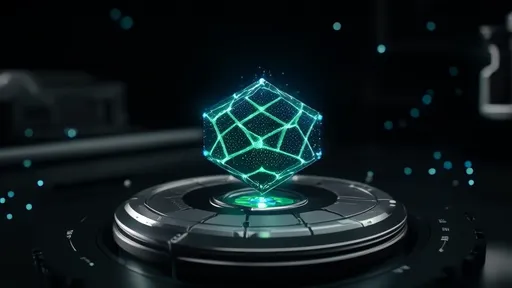
At the heart of this innovation lies the nitrogen-vacancy center, a atomic-scale defect in the diamond lattice where a nitrogen atom replaces a carbon atom adjacent to a vacant site. When exposed to green laser light, these NV centers fluoresce, and their emission intensity varies in response to magnetic fields. By meticulously measuring these subtle changes, researchers can map magnetic fields with nanometer resolution. This capability is particularly transformative for applications requiring extreme precision, such as underground mapping or the study of biological processes at the cellular level.
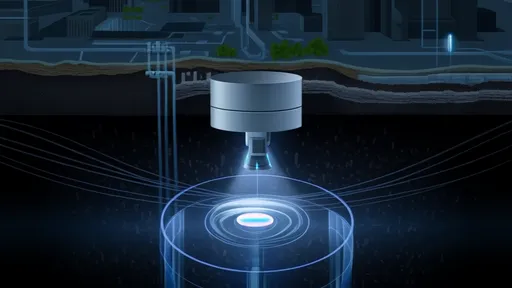
The implications for navigation are profound. Traditional GPS systems falter in environments where satellite signals are obstructed, such as underwater or deep underground. Diamond quantum compasses, however, rely on Earth's intrinsic magnetic field, which permeates all matter. By detecting localized magnetic anomalies, these devices can provide accurate positioning without external references. This could revolutionize submarine navigation, tunnel construction, and even space exploration, where conventional systems are often unreliable.
Beyond navigation, the technology opens new frontiers in scientific research. Geophysicists, for instance, can use diamond quantum sensors to study the magnetic signatures of mineral deposits or monitor tectonic activity with unparalleled detail. Similarly, in biomedicine, researchers are exploring ways to track magnetic nanoparticles within the human body, potentially enabling early detection of diseases like cancer. The ability to sense magnetic fields at such fine scales could also shed light on fundamental biological processes, such as neural activity in the brain.
One of the most striking advantages of diamond quantum compasses is their resilience to environmental interference. Unlike superconducting quantum interference devices (SQUIDs), which require cryogenic cooling, NV centers operate at room temperature. This makes them far more practical for real-world applications. Moreover, diamonds are chemically inert and mechanically robust, ensuring longevity even in harsh conditions. These attributes make the technology not only powerful but also versatile, adaptable to fields ranging from industrial quality control to defense.
Despite its promise, the technology is not without challenges. Fabricating diamonds with high-density NV centers remains a complex and costly process. Additionally, interpreting the data from these sensors demands sophisticated algorithms to distinguish meaningful signals from noise. Researchers are actively working to refine manufacturing techniques and develop advanced signal-processing methods to overcome these hurdles. As these efforts progress, the cost and complexity of diamond quantum compasses are expected to decrease, paving the way for widespread adoption.
The race to commercialize this technology is already underway, with startups and established companies alike investing heavily in its development. Some envision a future where diamond quantum sensors are integrated into everyday devices, from smartphones to autonomous vehicles. Others see them as critical tools for national security, capable of detecting stealth submarines or underground facilities. Whatever the application, one thing is clear: diamond quantum compasses are poised to transform our ability to perceive and navigate the world at the smallest scales.
As the field evolves, interdisciplinary collaboration will be key. Physicists, engineers, and material scientists must work in tandem to optimize sensor designs, while data scientists develop new ways to harness the vast amounts of information these devices generate. Meanwhile, policymakers and ethicists will need to address potential concerns, such as privacy implications of ultra-precise magnetic surveillance. The journey from laboratory curiosity to mainstream technology will undoubtedly be complex, but the potential rewards are immense.
In the grand tapestry of scientific progress, diamond quantum compasses represent more than just a new tool—they embody a paradigm shift in how we interact with the invisible forces that shape our world. By unlocking the ability to sense Earth's magnetic field at the nanoscale, humanity gains a deeper understanding of both our planet and the fundamental laws governing it. The future of sensing is here, and it sparkles with the brilliance of diamond.
By /Jul 28, 2025
By /Jul 28, 2025
By /Jul 28, 2025
By /Jul 28, 2025

By /Jul 28, 2025

By /Jul 28, 2025

By /Jul 28, 2025

By /Jul 28, 2025

By /Jul 28, 2025

By /Jul 28, 2025

By /Jul 28, 2025
By /Jul 28, 2025

By /Jul 28, 2025

By /Jul 18, 2025

By /Jul 28, 2025
By /Jul 28, 2025

By /Jul 28, 2025
By /Jul 28, 2025

By /Jul 28, 2025

By /Jul 28, 2025